




Innovation takes courage
Innovation drivers: two opinions
Georg von Krogh and Marc Gruber both teach innovation management at ETH and EPFL. But they have somewhat different views on how innovation arises.
Text: Melanie Loos | Photography: ETH / Olivier Christinat, EPFL
What does innovation need most urgently – money, ideas or courage?
Prof. Dr. Georg von Krogh: A brilliant talent is someone who has the courage to break conventions and think outside the box. Some large companies, like Google or Roche, realise that they need to foster this kind of courage in their people to explore and experiment.
Prof. Dr. Marc Gruber: Funding is important, and there’s funding in Switzerland for early-stage start-ups, but not enough for scaling up a promising new company. This is unfortunate, as it forces the most promising start-ups to seek funding abroad and likely move their headquarters elsewhere.

Prof. Dr. Georg von Krogh
Chair of Strategic Management and Innovation at ETH Zurich
Georg von Krogh is a professor of strategic innovation at ETH Zurich and head of department of management, technology, and economics. Georg teaches courses on entrepreneurial leadership, strategic management and innovation theory and research. Since 2024, he has been the chairman of the Public Interest Committee at PwC Switzerland.
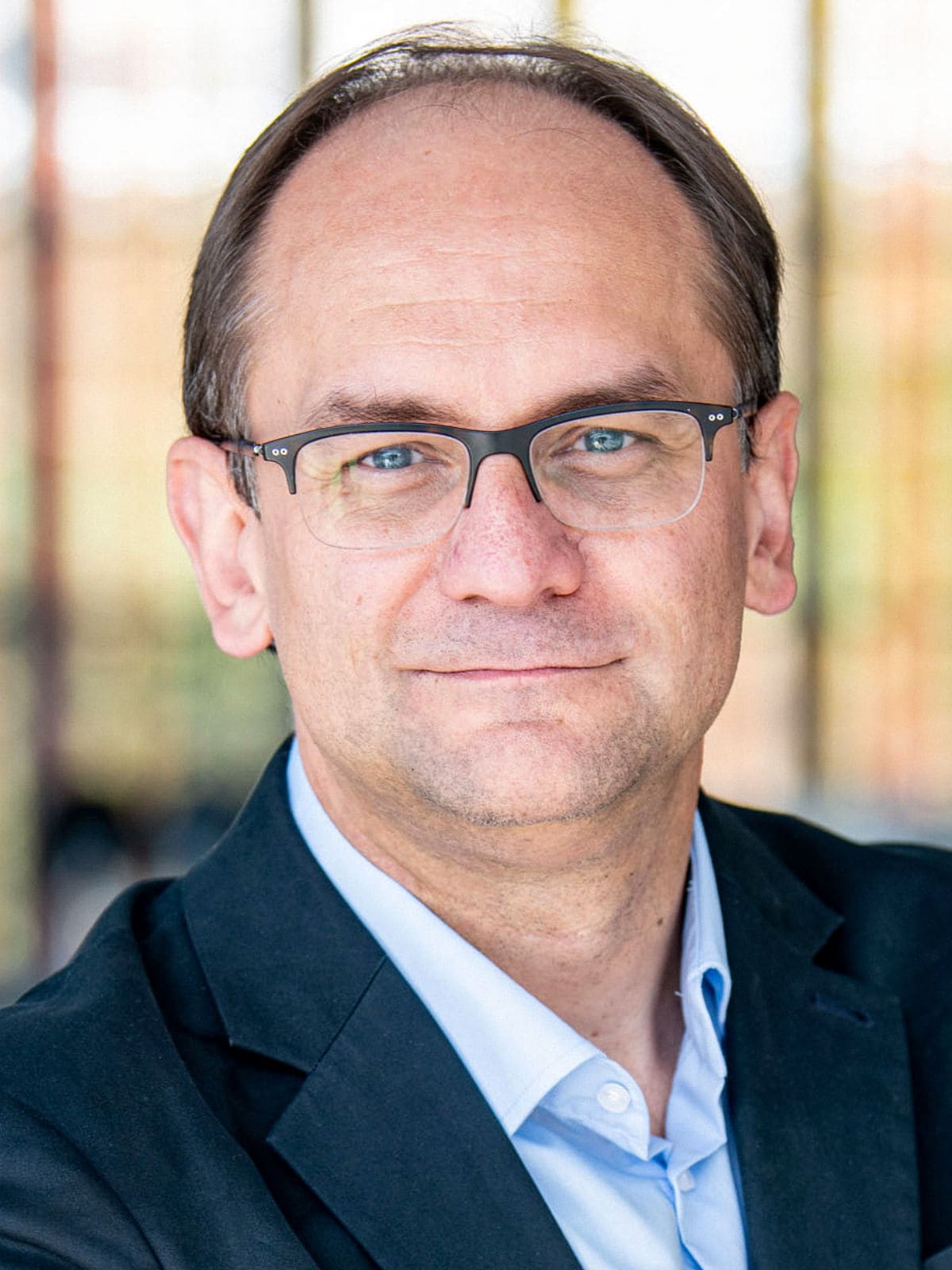
Prof. Dr. Marc Gruber
Chair of Entrepreneurship and Technology Commercialisation at EPFL
Marc Gruber is a professor at the College of Management of Technology at the École polytechnique fédérale de Lausanne (EPFL). He has held the Chair of Entrepreneurship and Technology Commercialisation there since 2005. He is the co-author of the book Where to play – 3 Steps for discovering your most valuable market opportunities, a business tool that helps firms identity new growth options.
Is there enough talent of this kind in Switzerland?
GK: Young people are the future innovators and are highly mobile. If they can’t find the right conditions or funding here, they’ll simply leave Switzerland to set up their business elsewhere. We have the right talent in Switzerland, but we need to make sure we keep these people by offering the best conditions for entrepreneurship and innovation.
MG: From my 20 years of teaching experience, I’ve noticed an evolution in students’ attitudes. Today’s younger generation are much more willing to become entrepreneurs. This takes courage, and they have the ambitious visions to enter the European or US markets and scale up their ventures.
Where does innovation arise – in the laboratory or in the market?
GK: When people do research in the lab and discover that their idea has commercial value, the following question arises: How can this be translated into a concept and a product or service down the road? We have an eco-system for innovation at ETH Zurich. And today, funding is available from the Swiss National Science Foundation and Innosuisse to develop these ideas further. In this regard, Switzerland has an advantage over other countries.
MG: At EPFL we’ve developed tools to support the creation of start-ups. In fact, Switzerland is home to two of the main tools of the world’s most widely used innovation framework for lean start-ups: the Business Model Canvas and the Market Opportunity Navigator.
Today’s younger generation are much more willing to become entrepreneurs. This takes courage, and they have the ambitious visions to enter the European or US markets and scale up their ventures.
Prof. Dr. Marc GruberChair of Entrepreneurship and Technology Commercialisation at EPFLWho are the greatest drivers of innovation – large companies or start-ups?
GK: Large companies can often implement innovations more effectively because they have greater resources and talent. They can scale up new ideas easier and faster, and bring new products to market more quickly. They can also employ a more diverse range of innovation staff from different technological disciplines and areas of the business, giving them a broader knowledge base. But all of this requires strong leadership.
MG: Large companies often face cultural obstacles that hinder radical innovation projects. It’s crucial to have an open mindset that acknowledges the assumptions inherent in innovative projects and the facts that are evident in current business operations. Managers must understand the differences and manage accordingly. Start-ups begin with many assumptions and can tolerate failure, whereas failure in established companies often results in job loss.
What are the biggest obstacles to innovation?
GK: The return on investment for research and innovation isn’t immediate, and large corporations tend to abandon innovations more quickly. They’re less patient and tolerant of failure than start-ups. These cultural barriers are one of the challenges that large companies face. However, some large companies are working hard on accepting failure as part of their culture.
MG: Innovation can sometimes cannibalise existing products in established companies, requiring leaders to manage these tensions. But few leaders excel at managing both existing operations and innovation simultaneously – the widely known issue of exploration versus exploitation.
The return on investment for research and innovation isn’t immediate, and large corporations tend to abandon innovations more quickly. They’re less patient and tolerant of failure than start-ups.
Prof. Dr. Georg von KroghChair of Strategic Management and Innovation at ETH ZurichWhat’s your advice for companies to help them foster innovation?
GK: We need to get more input from outside the company and allow people to take risks and cannibalise existing businesses. We need different types of leaders to those in traditional manufacturing companies, for example. People run factories, grow up and then become CEOs, which is a perfect path if your objective is to achieve efficiency and productivity. However, a different type of leader is needed for the innovation process. EPFL and ETH Zurich are both striving to develop these types of leaders.
MG: Even big, well-established companies don’t have the same breadth of insight into technological frontiers as technical universities. Both EPFL and ETH provide a one-stop shop for companies who want to understand the knowledge frontier and collaborate in joint research projects. We encourage small and medium-sized enterprises to work with us in order to remain competitive in an era where technology enables other players to enter their market and drive them out of business.
How can Switzerland remain the global innovation leader?
GK: Many Swiss companies engage in open innovation, seeking knowledge from diverse sources, such as suppliers, customers and universities. They also often acquire start-ups to integrate them into their innovation processes. The eco-system, which comprises both large and small companies, is highly innovative. However, there’s growing concern that Switzerland’s competitiveness is declining due to over-regulation, which often stifles innovation.
MG: Education has always been a key pillar of Switzerland’s success. Switzerland boasts a strong network of companies and university talent – which are essential assets for capitalising on technological disruption. However, cuts to university budgets threaten the attractiveness of universities and their ability to adequately educate students. As a country that relies on exports, Swiss companies must defend their competitiveness – and cutting-edge research is a key ingredient here.