




74% of sports executives in PwC's Global Sports Survey see integrity breaches as one of the biggest commercial risks to sport (Figure 1). Only 7% disagree. Integrity underwrites every revenue line, and once trust in the result is lost, so is the business built on it. This blog and the upcoming series looks at where integrity is most exposed and what it takes to protect it.
A Contest Whose Outcome Is Genuine
Strip away broadcast, sponsorship and matchday, and what remains is a single asset: a contest whose outcome is genuine. Each revenue stream keeps its value only as long as audiences believe in it. A sport can absorb weak performances or isolated misconduct, but not a widespread belief that results cannot be trusted, and perception shifts faster than any process can respond. Pressure on the integrity of results is rising: the betting integrity body IBIA recorded 300 suspicious betting alerts across 16 sports in 2025, its highest figure in five years. Some risks hit the organisation first, others the result itself, and over time the two compound. Olympic boxing shows both, and how long the consequences can take to arrive. An independent investigation found that bouts at Rio 2016 had been manipulated by the officials scoring them. The International Olympic Committee suspended its recognition of the federation in 2019 and withdrew it in 2023, on grounds extending to governance and finances. At stake was Olympic inclusion and the funding that depends on it.
Integrity breaches pose one of the biggest commercial risks to the future of sports
(executives, n = 434)

Figure 1: Integrity breaches as a commercial risk to the future of sport.
Source: PwC Global Sports Survey.
Value has outgrown protection
Insights from the Data
Our Global Sports Survey, now in its ninth edition, draws on more than 500 senior executives across 48 countries and more than 7,000 fans. Executives rank match-fixing (71%) and doping (49%) as the greatest threats to integrity (Figure 2). Weak governance (26%) and lack of transparency (14%) trail far behind, although they describe the very conditions under which manipulation becomes possible. Executives rank the symptom above the cause. Fans share the expectation of fair play, with 81% calling for stricter penalties for cheating.
What do you consider the greatest threats to integrity in sports competitions?
(executives, n = 465, mentions in top 2)
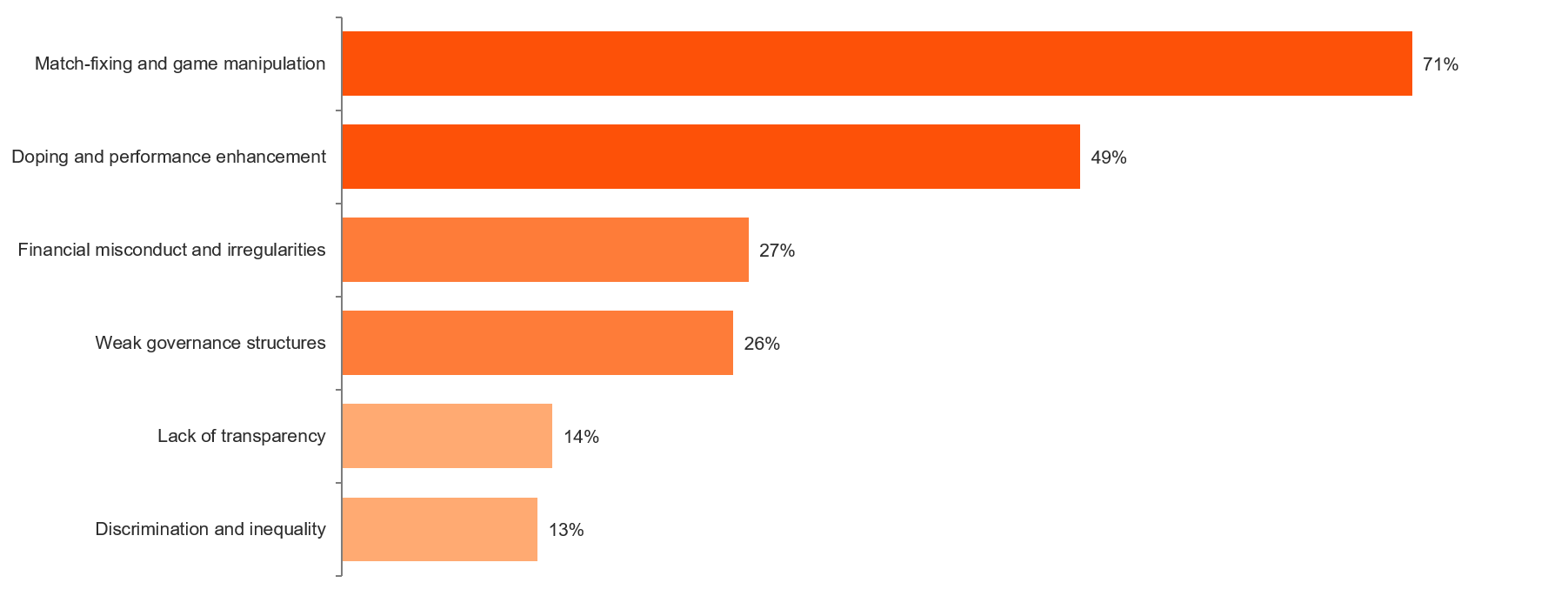
Figure 2: Greatest threats to integrity in sport.
Source: PwC Global Sports Survey.
Asked about the most effective measures, executives most often choose strict penalties, whistleblower protection and clear rules (57%), followed by education (52%) and transparent governance (44%) (Figure 3). Most of these work before a breach, yet the capacity to apply them, through people, processes and data, has rarely grown at the pace of commercial value and betting volumes.
What do you believe are the most effective measures to safeguard sports integrity?
(executives, n = 465, up to three options)

Figure 3: Executives’ view of the most effective measures.
Source: PwC Global Sports Survey.
Every new revenue stream raises the value of the result, and the exposure that comes with it. The bigger the business becomes, the more integrity has to sit at its centre.
Protecting the Asset
The difficulty is that integrity work protects value rather than creating it. It opens no new revenue line, and when it succeeds, nothing visible happens. Integrity budgets therefore tend to lag behind the business they protect, even as exposure keeps rising. Integrity belongs in the commercial line of sight, reported and resourced alongside media rights and sponsorship, and measured by the value it protects. But the level of exposure, and therefore the need for protection, is not the same across all sports. It is greatest where it cannot be shown that a result was correct, only that it was ruled to be so. Where outcomes rest on the judgement of panels or officials rather than time, distance or score, the scope for bias is far wider. The next article sets out what makes a call subjective, and by how much.
About the data:
- PwC Global Sports Survey (9th edition): responses from more than 500 senior executives across 48 countries and more than 7,000 fans.
- International Betting Integrity Association (IBIA), 2025 Sports Betting Integrity Report: 300 suspicious betting alerts reported across 16 sports in 2025. Five-year series 2021–2025 (https://ibia.bet/media/documents/IBIA_SBIREPORT2025_FINAL.pdf).
Contact us
Shin Szedlak
Sports Business Advisory, PwC Switzerland
Sports Business Advisory, PwC Switzerland
Léna Thurnherr
Sports Business Advisory, PwC Switzerland